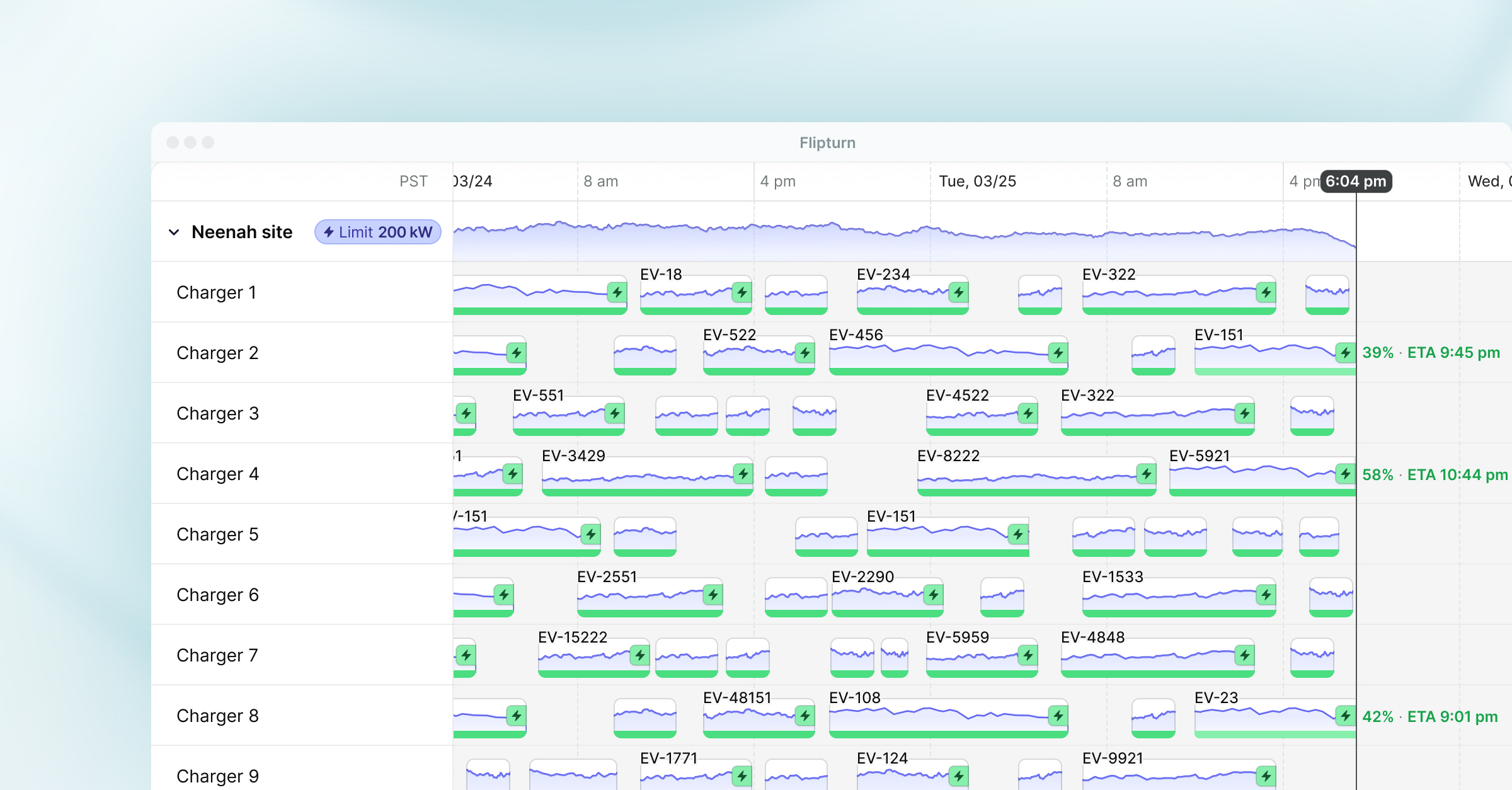
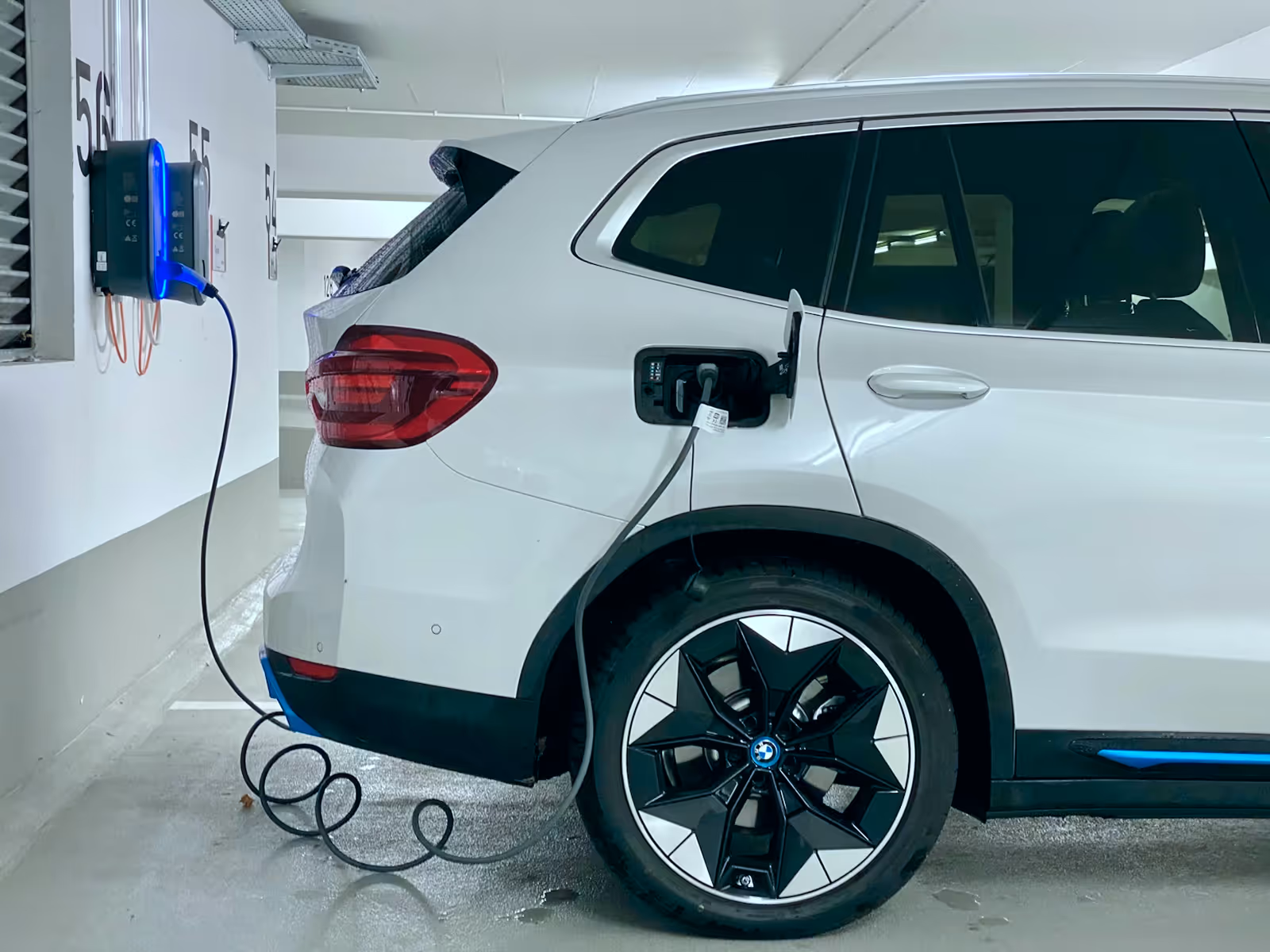
Medium and heavy duty fleets often choose to install charging infrastructure at their depot. Once you make that investment, you want the highest possible return on it.
On average, charging your EV will be much less expensive than fueling your gas or diesel vehicle. However, if you’re not careful, your fleet can incur higher-than-expected electricity costs from charging suboptimally. There are a few common sources of high energy costs, but they are easy to avoid with enough preparation and the right tools.
Charge at off-peak times
Utilities often charge different costs per kWh of energy at different times of the day. These time of use (TOU) rates depend on daily energy demand patterns; utility tariffs charge more for energy used during high demand periods and less during low demand times.
Charging during peak periods can be over twice as expensive as charging during off-peak times. In many cases, the lowest-cost time to charge is overnight. The figure below shows a breakdown of a PG&E TOU rate plan, with off-peak times starting at 9pm.
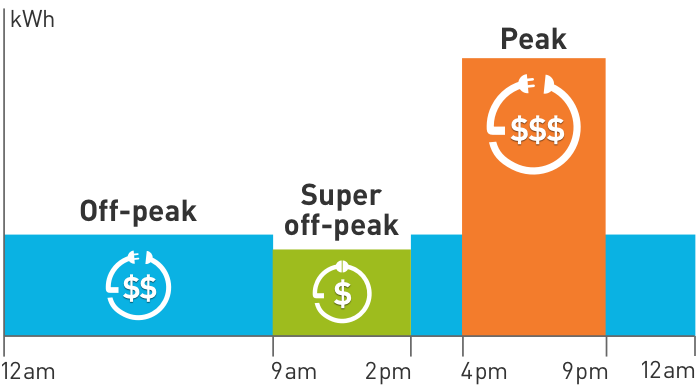
Consider the PG&E BEV rate schedule below (illustrative rates from 2023; current numbers differ, but the peak/off-peak structure is unchanged):
In this case, charging overnight during off-peak hours could save you nearly 50% in energy costs, compared to charging during peak hours. While the exact timespan of peak hours and specific rates may differ for your utility rate structure, most utilities will generally charge less for charging overnight.
Avoid demand charges
Demand charges are per-kW fees based on the peak power usage over the course of a certain time period, typically a month. For example, let’s say your facility’s typical maximum power usage is 500 kW, but on one particular day, your power demand spikes to 800 kW due to all of your vehicles starting to charge at the same time. Under certain utility rate structures, your demand charges will be based on that 800kW maximum, even if you stayed below that for the entire remainder of the month. In this case, if your utility charges $10 per kW for the demand fee, you will incur an extra $3000 in demand charges for the month for that one-time power usage spike, on top of your per-kWh energy usage fees.
There are two main ways to avoid or mitigate demand charges:
- Energy management software can apply "peak shaving," automatically limiting and staggering charging across the depot so total power draw never crosses the threshold that triggers a demand charge.
- Some utilities offer EV-specific rate structures that mitigate or completely eliminate demand charges from EV charging.
Select the right utility rate for your site
Utility companies often offer several different rate structures; a different energy tariff might help you save money on your monthly energy bill, as well as avoid demand charges. For example, PG&E and SoCal Edison both offer rates tailored towards charging commercial EVs, and some tariffs structure demand charges as a flat rate per kW. Other tariffs eliminate demand charges altogether; for example, PG&E offers rates that allow the customer to select a monthly power demand subscription level, with overage fees that only kick in after exceeding that subscription level (similar to a phone plan). Contact your utility provider to understand whether there may be a rate that better suits your fleet’s needs.
Avoid emergency opportunity charging with public chargers
Public chargers are notoriously unreliable. A recent study showed that 25% of public chargers are broken or unusable, and vehicles often have to wait in line to use them. Many public chargers are located in parking areas that are too cramped for a medium or heavy duty vehicle to access them. As a result, using public charging can lead to significant delays on routes.
Additionally, public charging rates typically range from 30-50 cents per kWh, depending on geographical location and the type of charger (Level 2 or DCFC). Off-peak depot charging rates can be under 20 cents per kWh, so charging at your depot can save you 30-60% on fueling your EV.
The best way to avoid public charging is through proper planning. Before a vehicle leaves the depot for a series of destinations, make sure that it is charged enough to comfortably complete the trip. Keep in mind that ambient factors such as temperature and cargo load can drop real-world range well below the manufacturer-advertised number. Monitoring battery state-of-charge across the fleet is the best way to avoid emergencies where a vehicle has to find a public charger, or worse, a tow.
Conclusion
While running electric vehicles is generally cheaper than gas or diesel, it's important to consider the factors above to maximize your cost savings. Charging at the right power level at the right time and place can save you as much as 50% on electricity costs compared to suboptimal alternatives.
However, applying these best practices to save money on charging can be operationally difficult. While some EV charging providers offer software that lets you monitor your chargers, these systems are usually completely disconnected from the rest of the tools you use to manage your fleet: telematics, routing, maintenance, and more. As a result, it can be difficult to optimize your charging operations to avoid high fees, while also making sure that your vehicles are always ready to go on their next route.
Charging optimization isn't a one-time setting; it's an operational discipline.Flipturn is hardware-agnostic, OCPP-compliant software that schedules charging around TOU windows, applies peak shaving to hold demand charges down, and shows you per-session cost so you can confirm the savings landed. See how Zeem Solutions runs a high-throughput charging depot, or book a demo.