
EV charging energy management software
Reduce energy expenses and infrastructure costs.
Flipturn's EV charging energy management software gives operators automated control over power distribution across every charger and site. Set grouped power limits, schedule charging by time-of-use rate, respond to utility demand response signals, reduce energy costs, and install more chargers without upgrading electrical infrastructure.
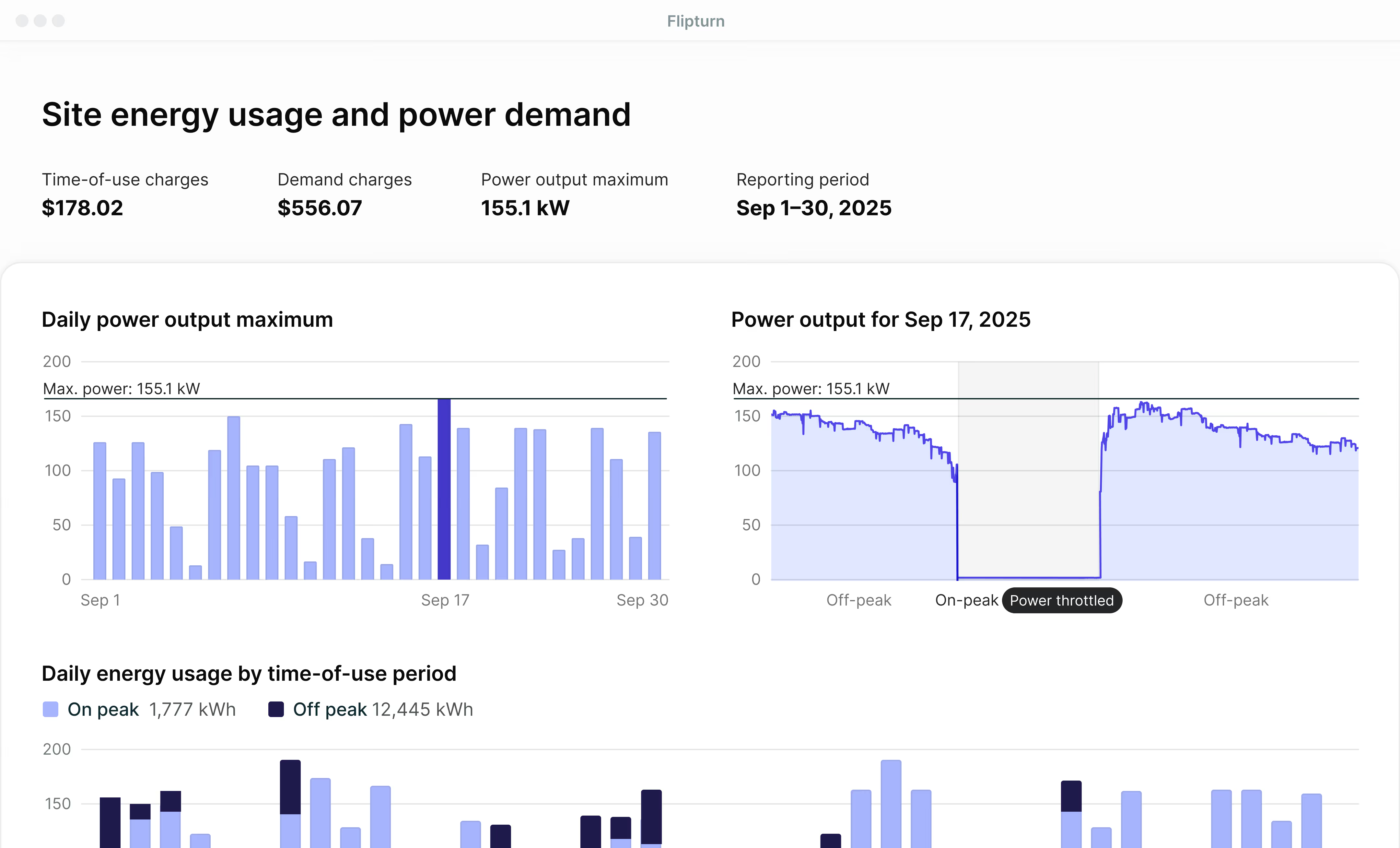








Dynamic load management
Flipturn's dynamic load management continuously monitors available site capacity and redistributes power across active chargers in real time. The result: more chargers on existing electrical infrastructure, without panel upgrades or costly grid investments.

Multi-level power limits
Apply limits to groups of chargers at the site, circuit, bay, or panel level. Flipturn always enforces the tightest applicable limit automatically, keeping every group within its electrical limits.
Granular charging controls and overrides
Bypass a schedule for maintenance events or specific exceptions without touching site-wide policy. Overrides apply to individual ports and expire automatically.
Priority charging and fleet queuing
Designate specific ports to receive power first when capacity is constrained. For fleet deployments, Flipturn also supports first-in, first-out queuing and vehicle-level priority rules so depot capacity is allocated based on arrival order or departure requirements. See fleet management features →
Distributed energy resource integration
Integrate on-site meters, solar generation, and storage. DER output feeds directly into Flipturn's load calculations alongside charger demand and building load. See how a customer integrated DERs →

“Flipturn's product considerably reduces peak power demand and charging costs, and provides in-depth visibility into charger reliability.”

Senior Manager IT at Purolator
See customer story
Smart charging and time-of-use optimization
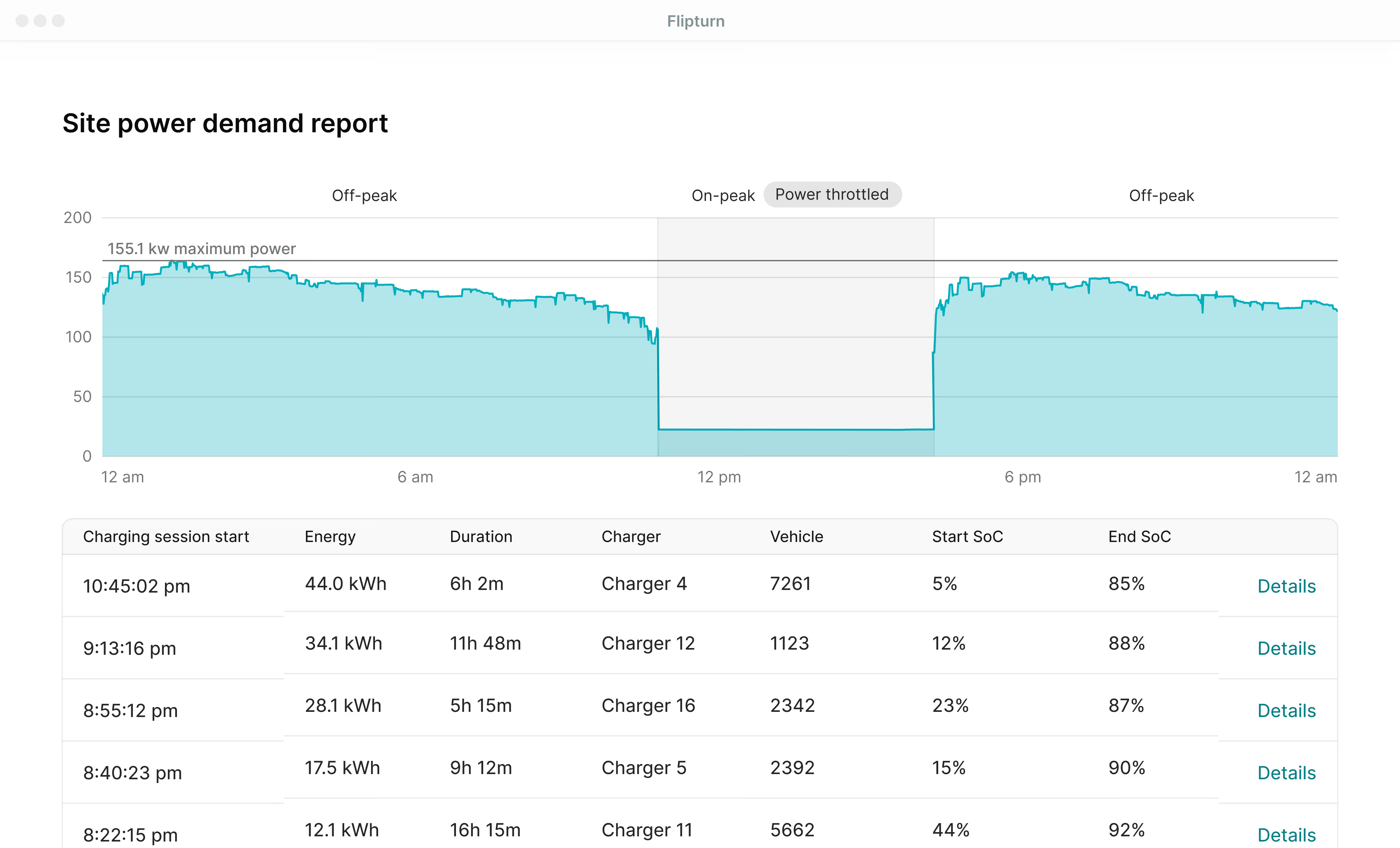
Flipturn's smart charging automatically aligns charging activity with your utility's time-of-use rate schedule, shifting load to off-peak windows and preventing demand spikes before they appear on your bill. Every session costs less without any manual scheduling.
Time-of-use schedule optimization
Flipturn shifts charging load to the cheapest available rate windows automatically, based on your utility's schedule. Operators can configure rate windows from the dashboard.
Peak demand management
Site power limits are enforced continuously, not just during scheduled windows. Demand spikes are prevented at the source, keeping demand charge costs consistently low.
Self-serve configuration
Set up and adjust TOU schedules, power limits, and charging policies directly from the dashboard. No professional services, no support ticket required.
Utility program participation
Flipturn supports utility programs that reduce energy costs and can generate additional revenue for operators, including demand response, flexible interconnection, and submetering.
OpenADR 2.0b demand response
When a utility issues a curtailment or capacity event via OpenADR, Flipturn can automatically reduce site charging load to meet the requested constraints.
IEEE 2030.5 and Flex Connect
Flipturn is IEEE 2030.5/CSIP certified, enabling standards-based integration with utility systems for programs like PG&E Flex Connect and other flexible interconnection programs.
Submetering
Flipturn supports utility submetering programs under PG&E, SCE, and SDG&E, unlocking access to submetering rates and program eligibility for EV charging sites.
Reliable energy management without network dependency
Flipturn is built to stay in control when conditions are not ideal, whether that means a rebooting charger, a vendor-specific firmware quirk, or a dropped WAN connection.
Self-healing adjustments
Flipturn detects non-compliant or rebooting chargers, rebalances power budgets across active ports, and flags problem ports for follow-up.
Charger-aware control
Model- and firmware-tuned behavior handles vendor-specific edge cases and applies safe defaults for hardware with limited OCPP support.
Local enforcement during WAN outages
With the optional Flipturn Controller hardware installed on site, power limits and schedules are cached locally and enforced even if cloud connectivity is lost.
See Flipturn Controller →


"Without Flipturn, we would be spending more on energy than a typical diesel truck. We dropped our electricity cost for heavy-duty charging from $0.40/kWh to about $0.18/kWh."

President at Titan Freight
See customer story
Fleet-focused energy management
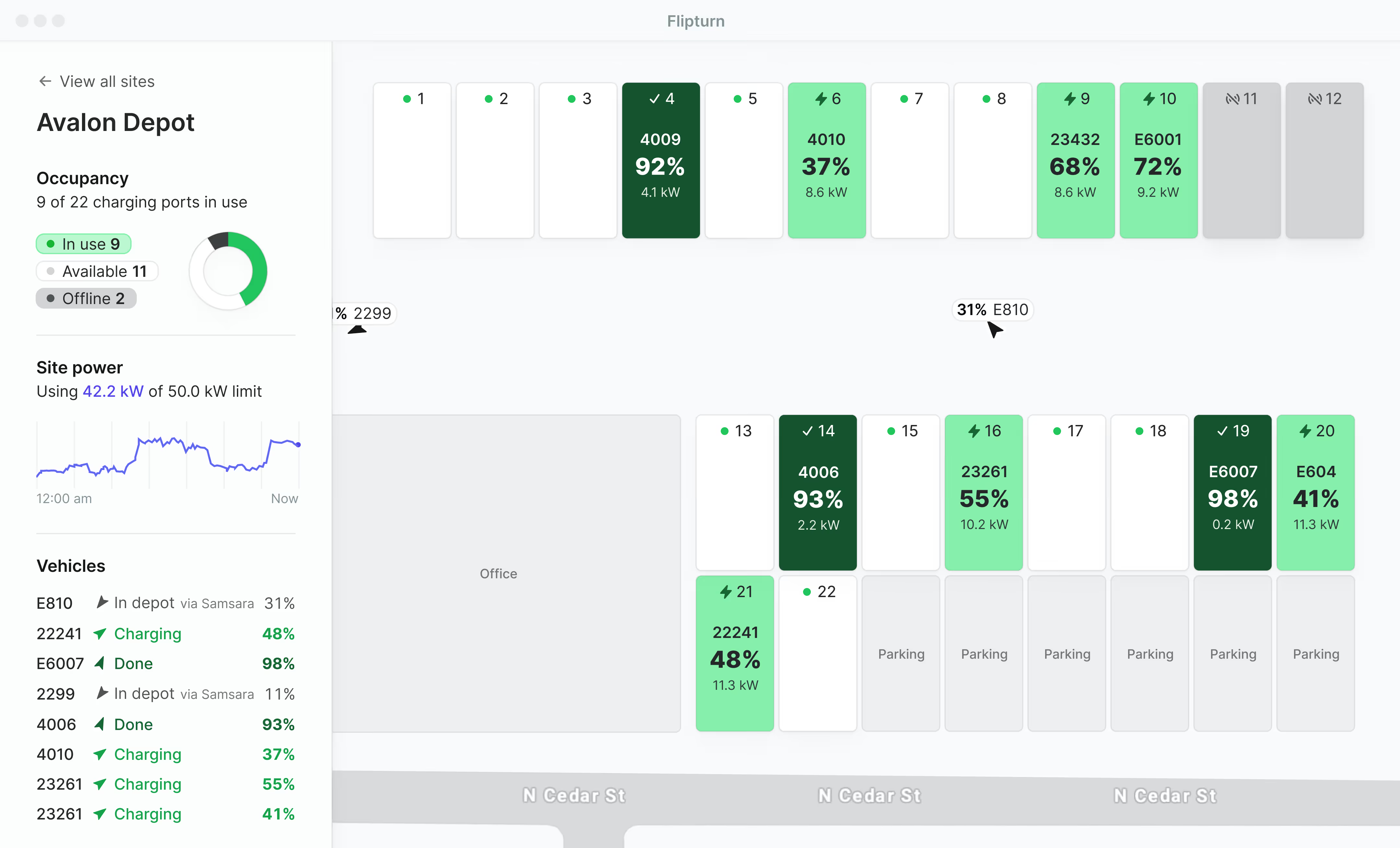
For fleet and transit operators, Flipturn extends site energy management with vehicle-aware controls: charging to a target state of charge, preconditioning for scheduled departures, and first-in first-out queuing when capacity is constrained.
Frequently asked questions
Can Flipturn help me avoid an electrical panel upgrade?
In most cases, yes. Dynamic load management distributes available electrical capacity across all chargers in real time, allowing significantly more charging ports to operate on existing service without dedicating a full circuit to each port.
How does Flipturn handle demand response events from my utility?
Flipturn receives utility signals via OpenADR 2.0b or IEEE 2030.5 and applies them as automatic site-level power ceilings. No operator action is required during an event.
Does Flipturn integrate with solar and battery storage on site?
Yes. Flipturn integrates with distributed energy resources including solar generation and on-site storage, coordinating local generation with charging demand to manage site power caps and reduce grid draw.
Do I need the Flipturn Controller to use energy management features?
No. Core energy management features run via the cloud and work with any OCPP-compliant charger. The Flipturn Controller adds local enforcement so sites stay within power limits even during network outages. It is recommended for sites with strict capacity constraints or reliability requirements, and may be required for participation in certain utility programs.
How quickly can energy management be deployed on existing infrastructure?
Flipturn connects to existing OCPP-compliant chargers without hardware replacement. Configuration of power limits, schedules, and rate structures is handled through the dashboard. Most sites are fully configured within a single setup session.
What size deployment is energy management designed for?
Flipturn's energy management scales from single-site deployments with a handful of chargers to multi-site operations with hundreds of ports. Power limits, schedules, and utility program participation are configured independently per site, so operators can apply different rules across a mixed portfolio.
Can Flipturn reduce my electricity costs, and by how much?
Flipturn reduces electricity costs primarily by cutting peak demand charges or shifting usage to lower cost times. Demand charges are billed based on your highest 15 or 30-minute consumption interval. By keeping EV charging below site power thresholds, operators typically see meaningful reductions in demand charge line items. Actual savings depend on utility rate structure and site usage patterns.