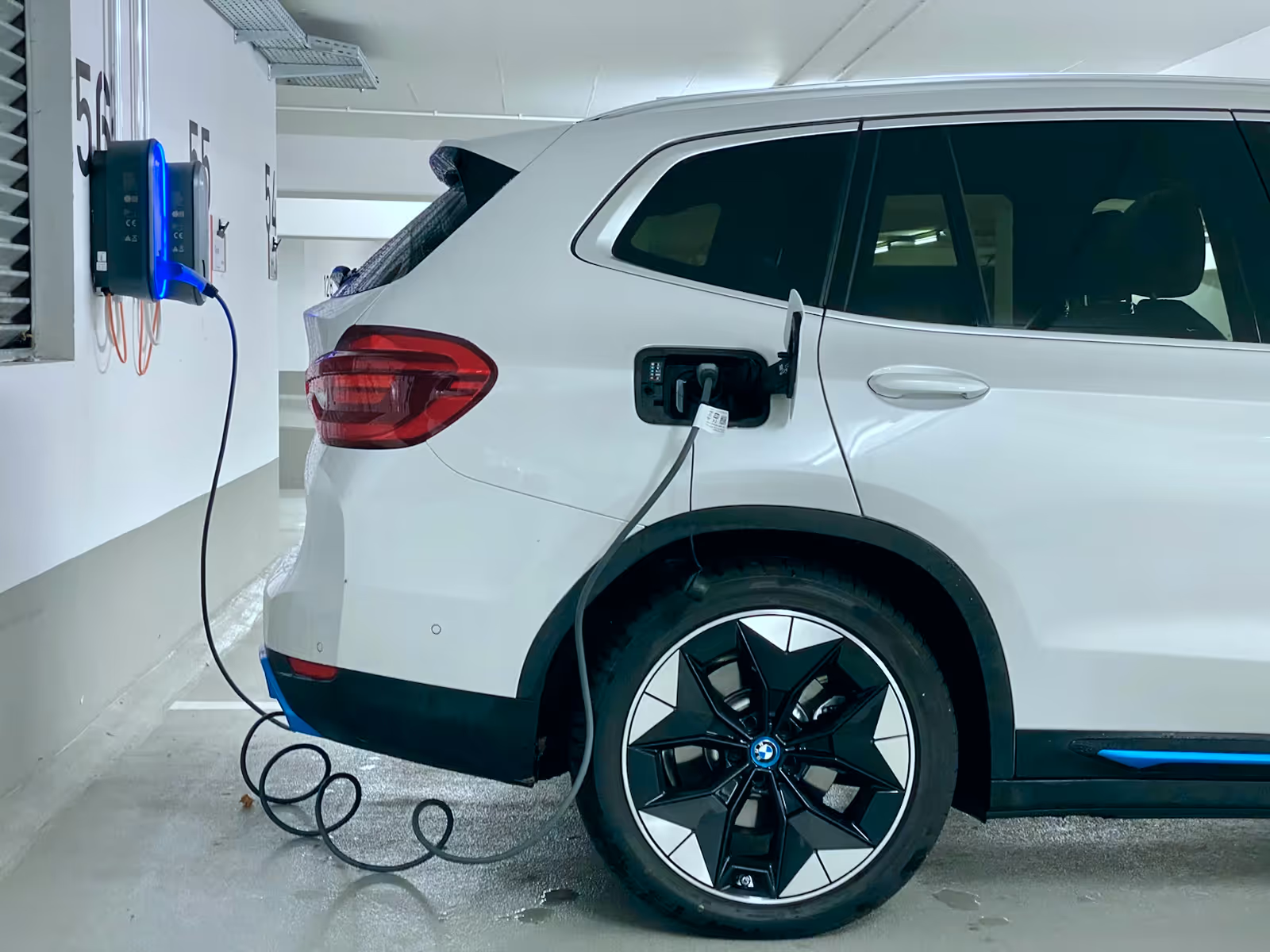

Range anxiety—the fear that an electric vehicle (EV) will run out of charge before reaching its destination—is a common reason cited by fleets for operating EVs conservatively or not deploying them at all. EV range is influenced by several factors: temperature, terrain, traffic conditions, cargo weight, driving efficiency, etc. We've covered how temperature affects EV fleet operations elsewhere. Here we focus on cargo weight: how much it actually moves the range needle, what that means for fleets, and how to manage it.
What is the effect of cargo weight on range?
Vehicle manufacturers (OEMs) typically report range as a single value or a limited set of values if they offer models with varying battery pack sizes. The way that OEMs report range varies slightly from one to the next, but often it is reported as a maximum achievable mileage under lightweight or no cargo load conditions. Some OEMs, however, will report range assuming some payload or extra weight on the vehicle. For example, the range analysis for the BrightDrop EV600 was completed at half payload capacity, per Fleet Forward. This lack of standardization for range calculation can create uncertainty about how much range EVs can actually achieve under real-world conditions.
As medium- and heavy-duty (MHD) commercial EV deployments are still relatively new, literature that specifically addresses the effects of cargo weight on their range is limited. However, we can draw on a handful of articles, demonstrations, and reports that have discussed the topic for EVs in general.
The general industry consensus is that an increase in cargo weight leads to a marked decrease in range. However, the extent to which range is impacted by cargo weight varies.
The most readily available data is for light-duty electric pickup trucks which indicates that payloads over 3,000 pounds (about 35% of the F-150 Lightning Platinum’s gross vehicle weight) can decrease range by 60-70%.

Fleet Forward also notes that as an EV's battery approaches depletion, the power delivered to its motor can drop. That means less power available to move the same cargo load compared to a situation in which the EV has a higher battery state of charge.
MHD fleets including PepsiCo and Anheuser-Busch have been testing this in production. In December 2022, a PepsiCo VP said the company's new Tesla Semis could haul Frito-Lay food products for around 425 miles, but for heavier loads of sodas, the trucks would do shorter trips of around 100 miles.
How can fleets manage this?
Plan ahead – know your routes and duty cycles well before deciding which EVs to procure and operate, and choose vehicles wisely. As you begin operating EVs, monitor how range fluctuates under different conditions – varying temperatures, cargo weight, drivers, etc. Use this knowledge to make informed decisions for any operational adjustments. For example, if you expect to haul a heavy load on a day that is particularly cold, expect your range to be lower than usual and plan accordingly.
Train drivers and incentivize efficient driving – driving an EV is a different experience than driving an ICE vehicle, and driver behavior correlates strongly with EV efficiency. Things like hard acceleration and hard braking can worsen efficiency, but they are preventable. As you deploy EVs, don’t forget to also train your drivers so they will be prepared to operate this new equipment. Also, consider developing a driver incentive or rewards program to encourage efficient driving.
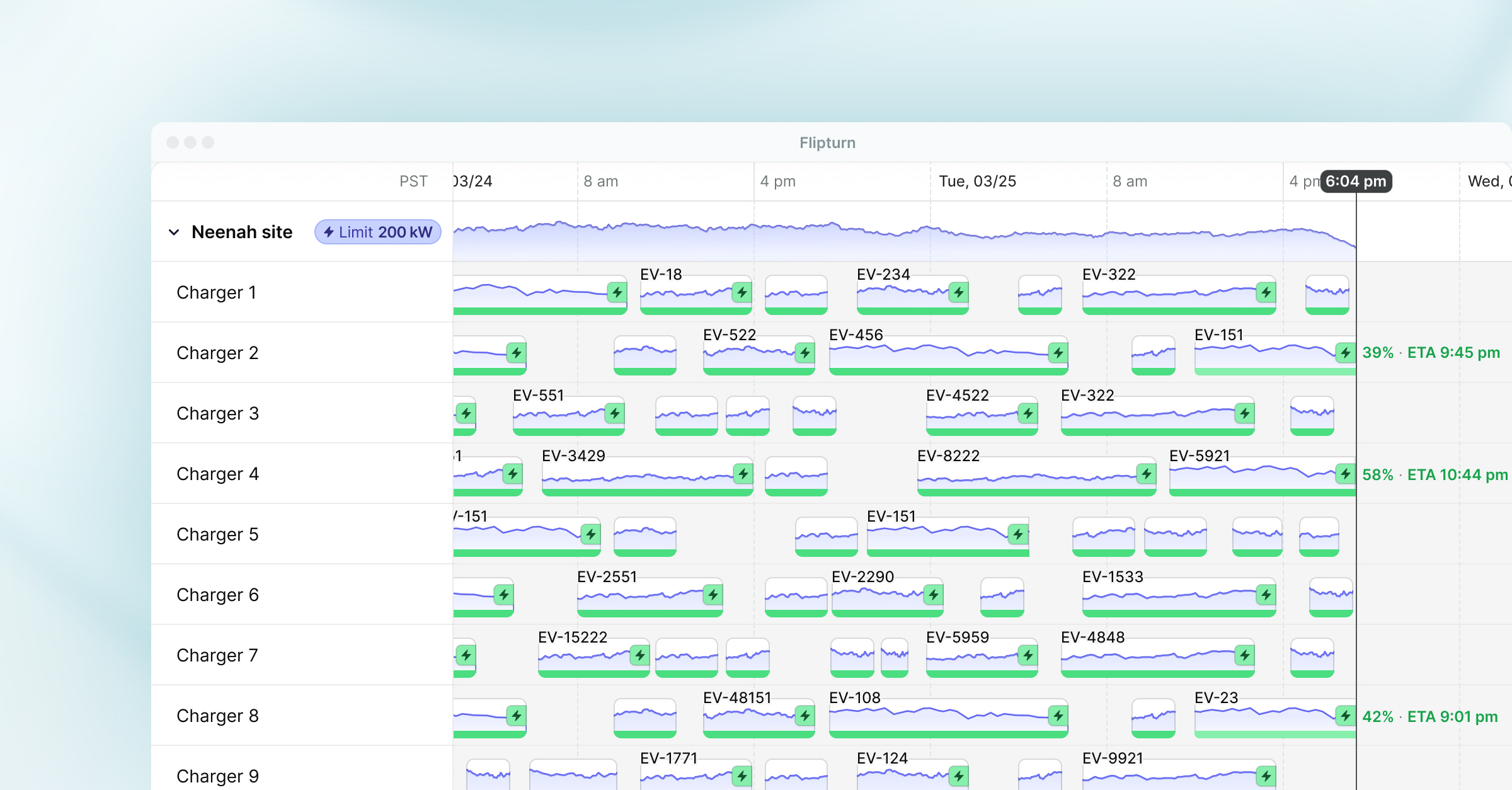
Use fleet charging management software built for EVs – several factors affect EV range, not just cargo weight, and accurately predicting it means accounting for them simultaneously. A system that pulls in telematics, charging state, and route data can surface the patterns no spreadsheet will catch.
Cargo weight is one input. Real fleets juggle six or seven of them at once. Flipturn is hardware-agnostic, OCPP-compliant software that pulls vehicle telematics, charging data, and route plans into one place so you can see how range actually behaves under load, temperature, and driver, and adjust before a route fails. See how Titan Freight Systems runs heavy-duty electric trucks in production, or book a demo.