Autonomous vehicles (AVs) are here. From Waymo’s robotaxi operations scaling rapidly to many cities, to Einride’s autonomous trucks hauling freight across highways, self-driving technology is transitioning from science fiction to daily reality.
As more companies launch AVs, one truth becomes clear: every autonomous vehicle on the road today is electric.
After seeing this, our team started asking a simple question: Why are companies like Waymo, Zoox, and Aurora all running EVs? Read on to learn why the path to autonomy runs directly through electrification.
Fine-grained controls
AVs need to have precise control over every component. When an AV's computer decides to accelerate, brake, or steer, that command must translate to physical action within milliseconds, with exact predictability.
Electric motors deliver this in ways internal combustion engines simply cannot, since an electric motor responds to commands almost instantaneously, and there are simply far fewer mechanical components that have to all be coordinated. (As an aside, this is also why EVs are cheaper to maintain.)
Internal combustion engines, by contrast, are controlled through a complex chain of mechanical systems. The throttle controls air intake. Fuel injection, then a combustion reaction, follows, which then powers the vehicle. Each link in this chain introduces latency and variability, which is suboptimal for an AV.
For a human driver, this latency is imperceptible. For an autonomous system making hundreds of micro-adjustments per second, it's a fundamental limitation. AVs need drive-by-wire precision, and electric powertrains deliver it natively.
Powering critical onboard equipment
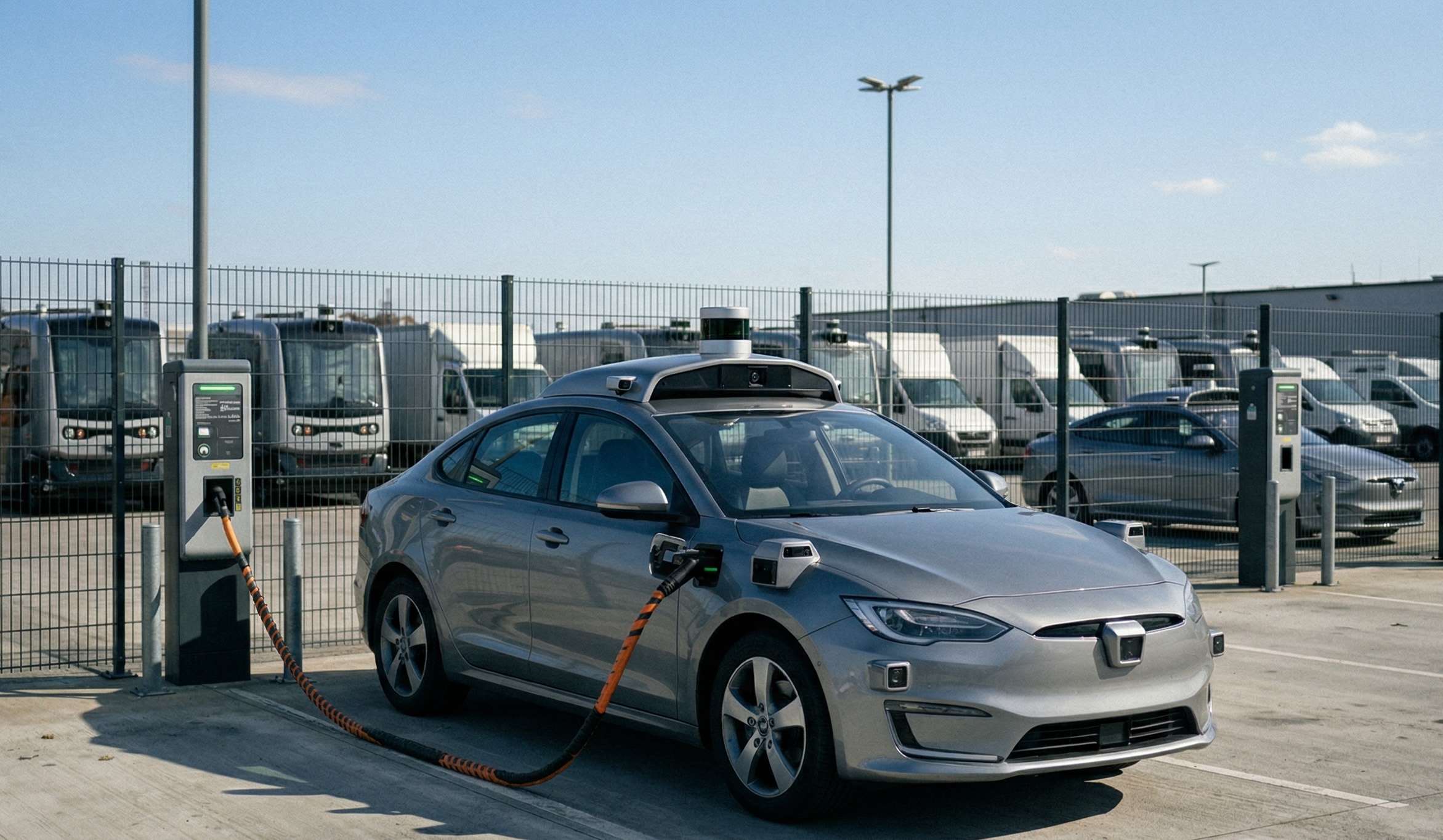
A single Waymo vehicle carries dozens of sensors, from cameras capturing every angle to LiDAR units sensing the surrounding world. This requires significant on-board computing hardware, which requires a substantial, consistent electrical power supply.
An internal combustion vehicle generates electricity as a byproduct of the engine running, through an alternator. This works fine for headlights and stereos, but doesn't work for powering a powerful computer. You'd need to keep the engine running constantly, add auxiliary power units, or install a separate battery system that adds weight, complexity, and another potential failure point.
With electric AVs, the high-voltage battery that propels the car also powers the autonomy stack. The electrical architecture is already built for high-power, consistent delivery, so can easily power the additional on-board hardware.
The future is electric, because the future is autonomous
If you believe autonomous vehicles represent the future of mobility, you necessarily believe that future is electric. The requirements of autonomous driving—precise control and significant on-board equipment—are best fulfilled by building on an EV platform.
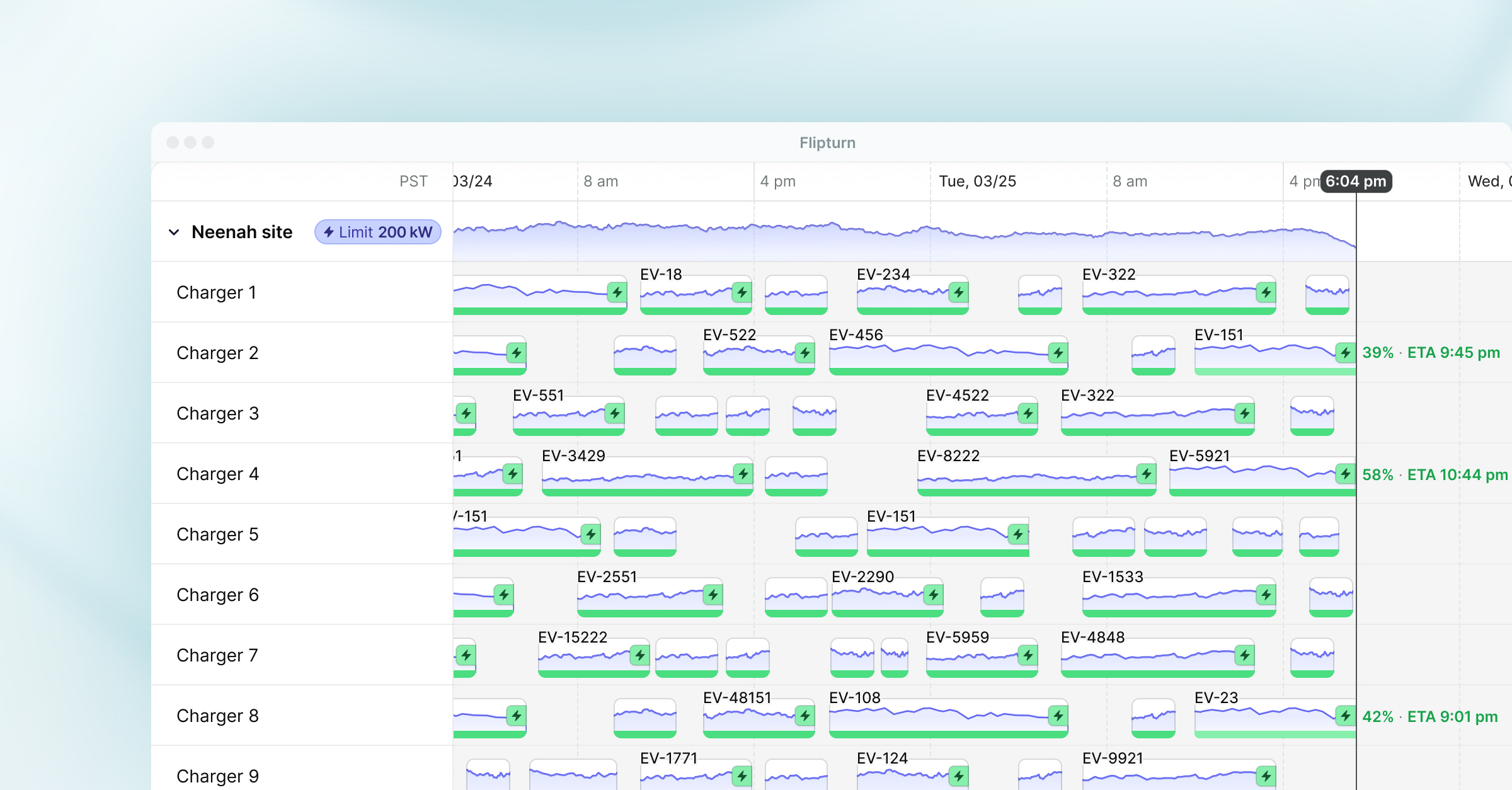
At Flipturn, we’re excited to be powering large-scale AV charging depots across the nation. Our software provides the critical real-time visibility that depots need to keep uptime high and AVs on the road.
Operate an AV fleet or want to learn more about how our platform supports maximum uptime? Let's chat!
About Flipturn
Flipturn is the leading EV charging and energy management platform for businesses and fleets, helping organizations maximize charger uptime, process charging payments, and scale operations efficiently. Backed by leading investors including CRV and Accel, Flipturn serves Fortune 500 companies, commercial property owners, and major fleet operators across North America.