

"This creates a much more proactive approach for our night dispatch team to help monitor potential delays with port appointment pickups that could result in a missed LFD (Last Free Day). By identifying potential issues earlier, Driver Managers have additional time to evaluate alternatives, including reassigning the load to another available driver who can make the appointment.
Even when another driver is not available, the early visibility still provides value. In a worst-case scenario, the Driver Manager has an opportunity to cancel the appointment in advance rather than allowing it to become a no-show. This helps reduce unnecessary fees, protects appointment availability, and gives the team more control over exceptions before they become costly problems."

VP of Strategic Initiatives at 4Gen
Keeping it moving
4Gen Logistics' operation across the Los Angeles metro is built to maximize productive turns per driver each day, making fast port pickups critical to fleet performance. When a driver is unexpectedly delayed at a terminal, the impact extends beyond that pickup: the delay ripples through the driver's remaining schedule, putting subsequent appointments, especially containers approaching their Last Free Day (LFD), at risk. A missed LFD can mean demurrage of up to $400 per container, per day.
Approximately 25% of 4Gen's port pickups take longer than one hour due to terminal congestion. That one-hour mark is the critical signal: the driver's upcoming appointments may be at risk, and operations still has time to intervene.
Shift-aware dwell alerting
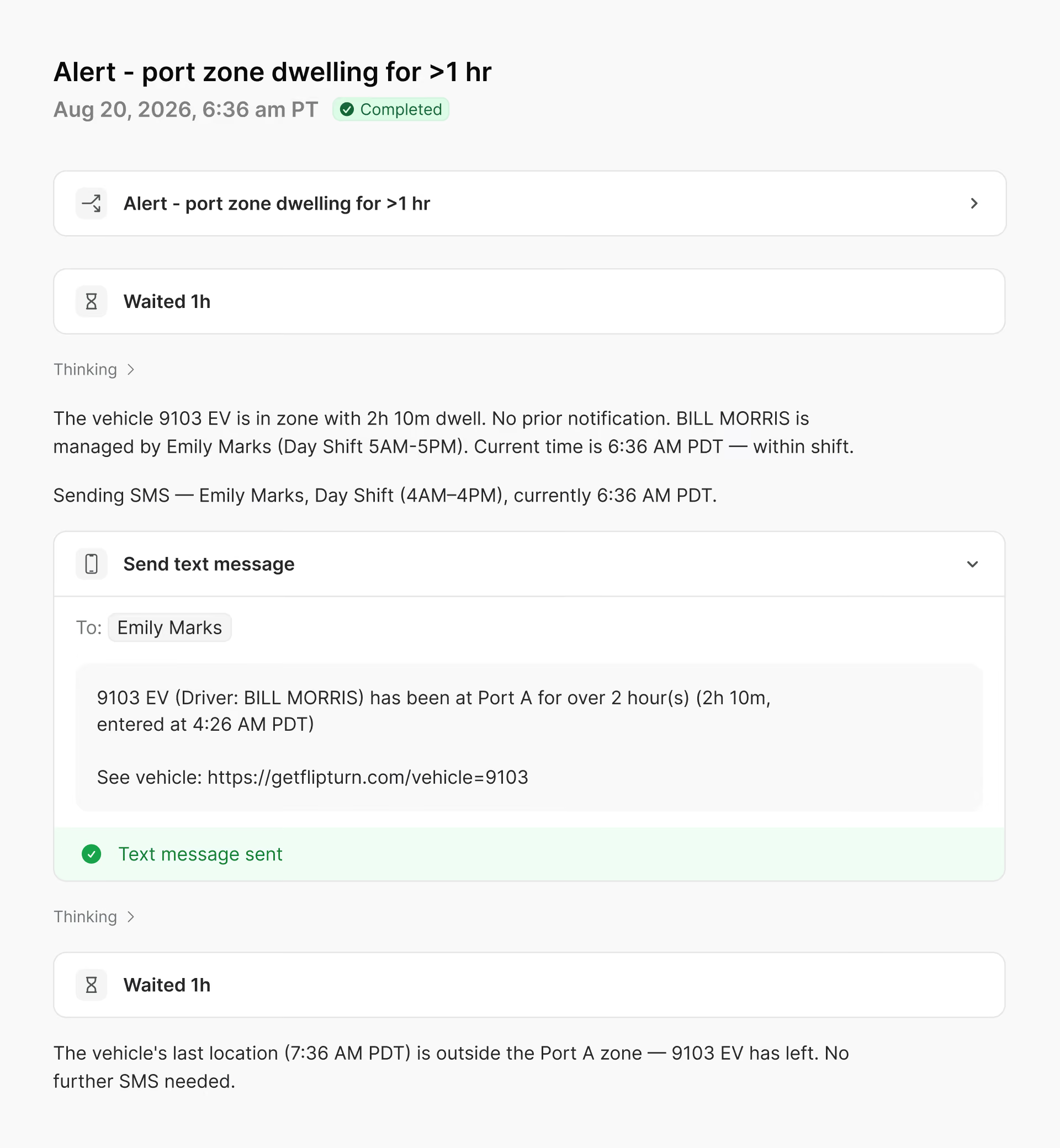
Using Flip AI’s configurable automations, 4Gen operations leadership Dennis Aguilar and Brad Bayne set up dwell alerts around the one-hour threshold. When a truck spends more than an hour inside a major port terminal, Flip AI alerts the Driver Manager responsible for it. After hours, the alert goes to the night-shift team. Flip AI follows up every hour until the truck leaves the terminal.
The alert gives Driver Managers time to protect the driver’s next appointment. At-risk terminal pickups average about 1 hour and 35 minutes, giving Driver Managers roughly 35 minutes to intervene.
The morning report
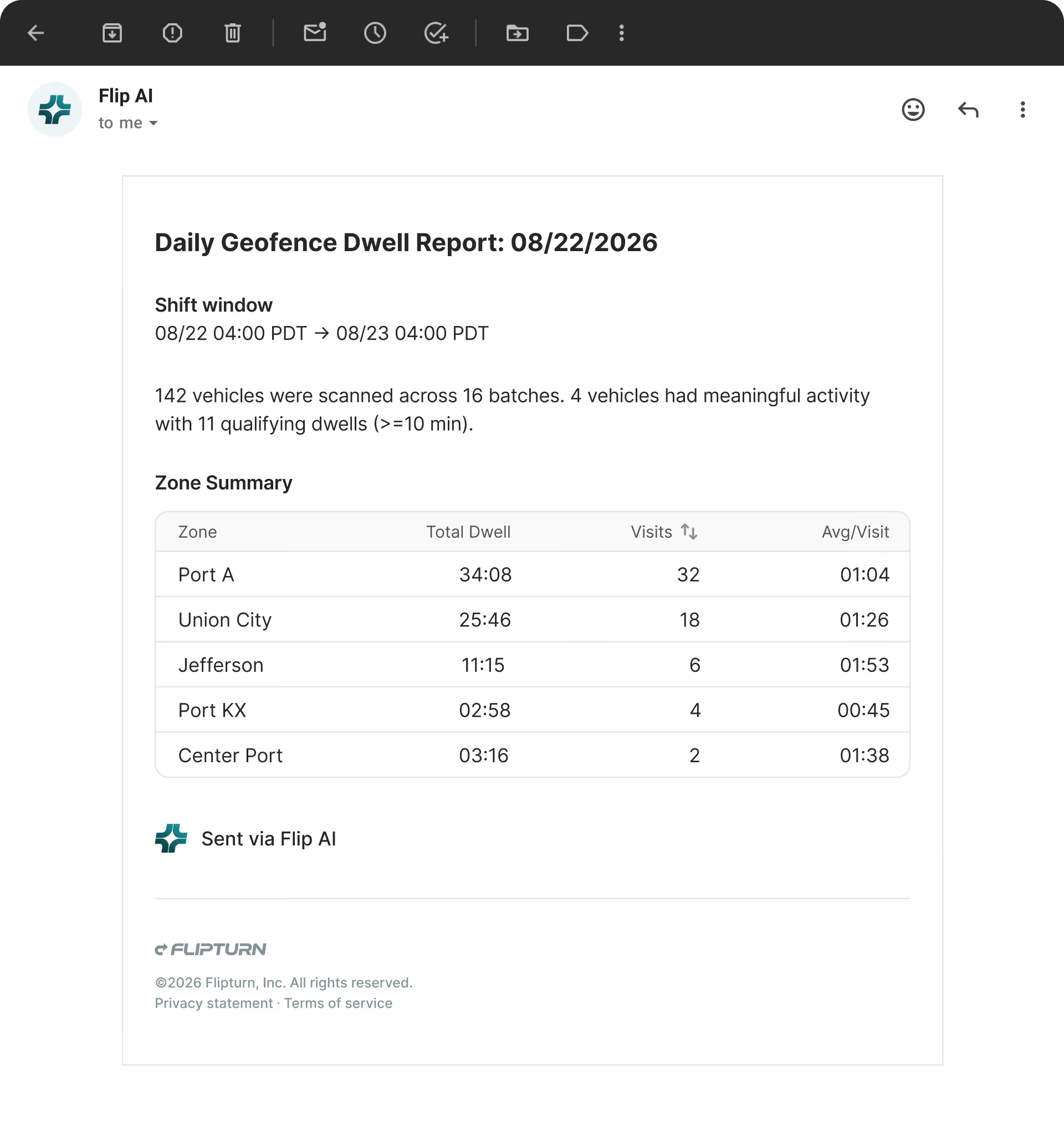
Each morning, 4Gen's operations leadership receives an automated dwell report summarizing the previous day: port-level dwell performance and a truck-by-truck breakdown of where each vehicle was and how long it stayed.
The report quickly became a daily management tool. Leadership works backward from exceptions ("Truck 9123 spent three and a half hours at PCT. What happened?"), surfacing driver-side, dispatch-side, and terminal issues that were previously difficult to identify. It also adds context to driver productivity: what looks like a driver performance issue is often excessive terminal dwell, and leadership now has objective data to tell the difference.
Flip AI also gives 4Gen an independent source of dwell data. Management can compare actual truck location and dwell history against terminal-reported figures, identifying discrepancies and validating detention events.
Combined with the real-time alerts, the reporting gives 4Gen two levels of value: proactive intervention during the day and data-driven accountability after the fact.
What's next
4Gen is now applying the same approach to the other end of the drayage move: identifying live-load customer locations that consistently hold trucks beyond acceptable dwell times. The next phase introduces customer-site dwell alerts and location-specific dwell records.
That visibility opens a significant opportunity: turning previously absorbed detention into documented, recoverable revenue. Rather than relying on driver reports or incomplete timestamps, 4Gen will have objective data showing when a truck arrived, how long it stayed, and when it left: the documentation needed to support detention billing and to identify the customers and facilities that consistently drag on fleet productivity.