

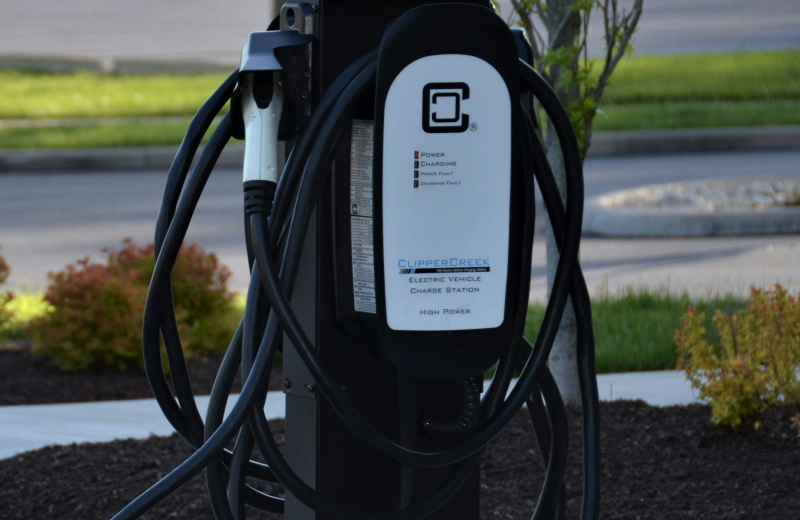
EV drivers everywhere have had the same experience: you pull up to a charger you found on an app, and you can't get a charge. Maybe the charger is off, the cable is broken, it won't accept your payment, or your vehicle doesn't get enough power.
Uptime and reliability of EV chargers is a hot topic right now, rightfully so. For fleets, the issue is especially critical — if you can't charge a rideshare vehicle, delivery van, or drayage truck, you can't run your business at all.
This article covers one way uptime is measured today, why charger reliability needs are different for fleets, and how a single uptime metric doesn't capture common error scenarios.
Existing efforts to measure uptime: NEVI as an example
NEVI, the program aimed at expanding charger coverage across all 50 states in the US, includes one of the most prominent examples of measuring charger uptime:
- 97% uptime. Each charging port must have an average annual uptime of greater than 97%, which allows for about 11 days of downtime per year. There's a minimum required power level of 150 kW for DC chargers and 6 kW for AC chargers.
- Excluded downtime. Electric utility service interruptions, failures due to the fault of the vehicle, scheduled maintenance, vandalism, and natural disasters don't count as downtime.
- Outage reporting. Charging stations must have a way to report outages and malfunctions.
The full requirements are in the Code of Federal Regulations, Title 23 Part 680.
Fleets have even higher charger uptime requirements
The NEVI requirements are a good starting point but aren't strict enough for many fleets:
- Vehicle compatibility is critical. If a vehicle is unexpectedly incompatible with a charger, that's just as bad as the charger being down.
- Maintenance is still downtime. If a charger is being maintained, the fleet can't use it to charge, which can mean lost business.
- 97% may not be good enough. Eleven days of downtime is a lot for business-critical operations.
Unlike public charger operators, fleets have several levers to improve reliability:
- Offline chargers can still charge. When a public charger is disconnected from the internet, it often can't deliver power. Fleet chargers can be configured to start charging without a network connection — with Flipturn Controller, local enforcement keeps charging running even during WAN outages.
- Vehicle compatibility testing. Fleets can test vehicle compatibility and identify issues up front.
- Driver issue reporting. Drivers of fleet vehicles tend to be more motivated to report charger issues quickly than the average public charger user.
Beyond this, the idea of measuring uptime as a single percentage metric has flaws.
Uptime as a metric doesn't cover the most common fleet issues
In our experience managing chargers at large sites, charger uptime and connectivity is often not representative of charger health. It's common for a charger to report that everything is fine while a one-off issue prevents charging. For example:
- Failure to start charging. Vehicle-to-charger communication failures, among other things, can prevent a session from starting.
- Unexpected charging stop. A power outage, voltage issue, or even an unexpected software update from the manufacturer can interrupt charging.
Neither would show up on a charger uptime metric as defined above, because the charger isn't "down" for any amount of time. It's a single point-in-time failure that disrupts operations, but the charger itself isn't broken.
A better approach: combine uptime, utilization, and error count
Since most issues that affect fleets can't be captured in a single uptime metric, it's important to look at several metrics for charger reliability in combination:
- Uptime and connectivity
- Number of charger errors that led to charging disruptions
- Number of driver issue reports
- Number of successful charging sessions
Chargers send error signals over OCPP that indicate conditions like failing to start, unexpectedly ending a session, and more. Flipturn's charger monitoring tracks how many issues are coming in, ranks which chargers are reporting the most, and surfaces patterns over time. That combination is the best way for fleets to get a handle on overall charger reliability.
Improve your fleet's charger reliability
Improving the reliability of EV charging is one of the biggest contributions any of us can make toward EV adoption. If you want to see how Flipturn tracks uptime, errors, and utilization across your charging infrastructure, book a demo.
About Flipturn
Flipturn is a leading charging management solution for fleets. The platform combines energy management to minimize utility costs, charger monitoring to improve uptime and issue resolution speed, and fleet charging management for cost per mile and range insights.

.jpeg)